Browse article topics
Why Doors Rattle at Handover in New Homes and What It Means
Updated:
When walking through a newly completed home at handover, most finishes appear complete and ready for occupancy. However, some issues only become noticeable once the home is fully enclosed and operational. One of the more common examples we see in suburbs like Cobblebank, Sunbury, Greenvale and Plumpton, is doors rattling when closed.
While this is typically identified at handover, the underlying causes often begin much earlier in construction, sometimes as early as frame or fixing stage.
This type of issue is often identified during final-stage checks outlined in New Build Stage Inspections in Melbourne — A Complete Guide to Every Inspection Stage, particularly where functionality is assessed rather than just visual finish. It also regularly forms part of findings within Practical Completion Inspection Checklist in Melbourne — What to Look For Before Handover, where doors, windows, and hardware are tested in real conditions.
Understanding why doors rattle at handover in new homes and what it means helps clarify whether the issue is minor, why it occurs, and what should be addressed before completion.
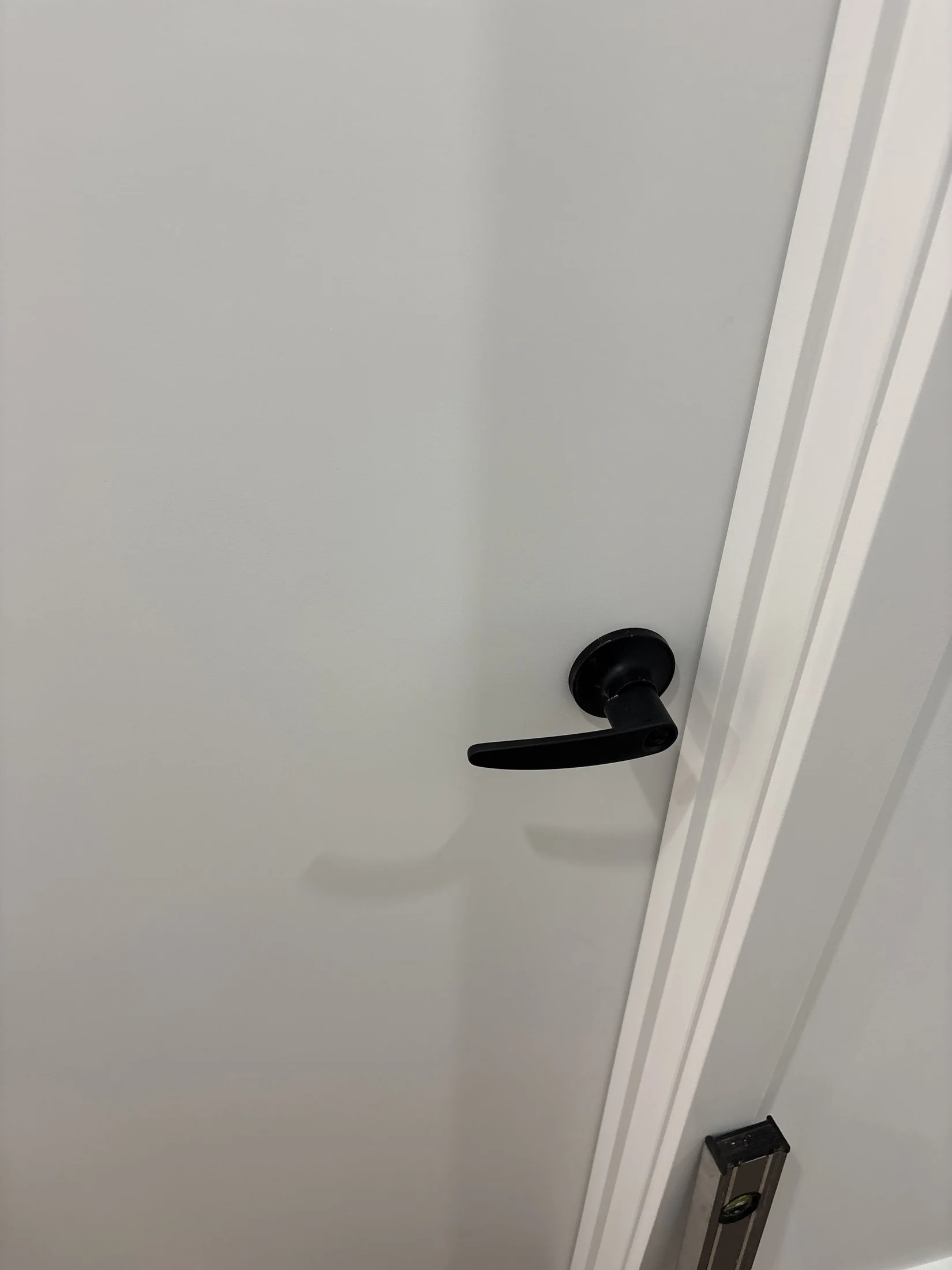
What Causes Doors to Rattle at Handover in New Homes
Doors rattling at handover is typically the result of minor alignment or hardware issues, rather than major construction faults.
While these issues are often noticed at handover, they can sometimes relate back to earlier installation or alignment stages. This is why some homeowners choose to understand the build progressively, particularly in areas like Strathtulloh, Armstrong Creek, Berwick and Weir Views where construction moves quickly between stages.
Common causes include:
Latch not sitting firmly in the strike plate
Strike plate installed slightly out of position
Door frame movement during construction drying and settling
Air pressure differences between rooms once the home is sealed
Hardware not fully adjusted during final install
In most cases, the door appears straight and closes properly, but there is enough tolerance between the latch and strike plate to allow movement.
These issues often sit alongside other finishing-stage defects discussed in Common Defects Found at Practical Completion Stage in Melbourne, where small alignment inconsistencies become more noticeable.
Why Rattling Doors Often Appear Late in Construction
A key reason this issue becomes visible at handover is construction sequencing.
Earlier stages:
Doors may not yet be installed
Hardware is incomplete
The building is not sealed
At completion:
Doors and hardware are fully installed
Internal air pressure changes occur
The home is closed and operational
This shift highlights functional issues that were not visible earlier, which is why they are typically identified during final inspections explained in When Is the Right Time to Book Each Stage Inspection for a New Build?
Is a Rattling Door Considered a Defect
In most situations, yes.
Doors are expected to:
Close smoothly
Latch securely
Remain stable when shut
If a door rattles when closed, it generally indicates incomplete adjustment or poor latch engagement.
From a practical standards perspective, functional elements like doors are expected to operate as intended. Movement or vibration when closed would usually be considered a functional defect, rather than just a cosmetic issue.
How This Is Identified During a Practical Completion Inspection
During a practical completion inspection, doors are physically tested rather than just visually checked.
Inspectors will assess:
Whether the door latches correctly
Alignment within the frame
Stability when closed
Hardware function and feel
This hands-on testing approach aligns with checks outlined in Fixing Stage Defects in New Homes — What Gets Missed Before Handover, where final-stage performance is assessed.
Even light pressure or natural airflow can reveal movement that would otherwise go unnoticed.
What Needs to Be Fixed Before Handover
Rattling doors are generally straightforward to fix and should be addressed before handover.
Typical rectification includes:
Adjusting the strike plate position
Increasing latch engagement depth
Tightening door hardware
Minor alignment corrections to door or frame
Because these are finishing adjustments, they are usually quick to resolve when identified early. This reinforces the value of inspection timing discussed in Why Independent Inspections Are Carried Out at Multiple Stages of a New Build.
What Inspectors Check at Each Stage to Prevent Rattling Doors at Handover
While rattling doors are most commonly identified at handover, the underlying causes often begin much earlier in construction. Understanding what is checked at each stage helps explain how these issues develop and how they can be prevented.
Frame Stage
At frame stage inspection, door openings and structural alignment are assessed.
Inspectors typically look at:
Straightness and plumb of door openings
Frame tolerances and overall wall alignment
Adequate allowance for door installation
While doors are not yet installed, any deviation here can carry through to later stages and affect how doors sit and operate.
This stage forms the structural foundation for door performance later, as explained in New Build Stage Inspections in Melbourne — A Complete Guide to Every Inspection Stage.
Lock Up Stage
At lock up stage inspection, external doors and some internal components may be installed.
Inspectors check:
Door frame installation quality
Initial door alignment within openings
Fixing and stability of door jambs
Early signs of frame movement
At this point, doors may be functional but not fully adjusted. Small inconsistencies here can become more noticeable once finishes are complete.
Fixing Stage
The fixing stage inspection is where most door-related issues begin to take shape.
Inspectors assess:
Installation of internal doors
Hardware fitment including handles and latches
Door clearances and swing
Early latch engagement
This stage is critical because it introduces the components that directly influence whether a door will later rattle.
Issues identified here are often discussed in Fixing Stage Defects in New Homes — What Gets Missed Before Handover.
Practical Completion Stage
At practical completion inspection, doors are fully installed, adjusted, and expected to perform correctly.
Inspectors check:
Full latch engagement
Stability of door when closed
Alignment within frame
Hardware operation under normal use conditions
This is the stage where rattling doors are most commonly identified, as the home is now sealed and functioning as intended.
If a door is rattling or not sitting correctly, it may not just be hardware related. Frame alignment plays a big role in how the door performs. This ties directly into why some door frames appear crooked and how that affects usability.
These checks align with the process outlined in Practical Completion Inspection Checklist in Melbourne — What to Look For Before Handover.
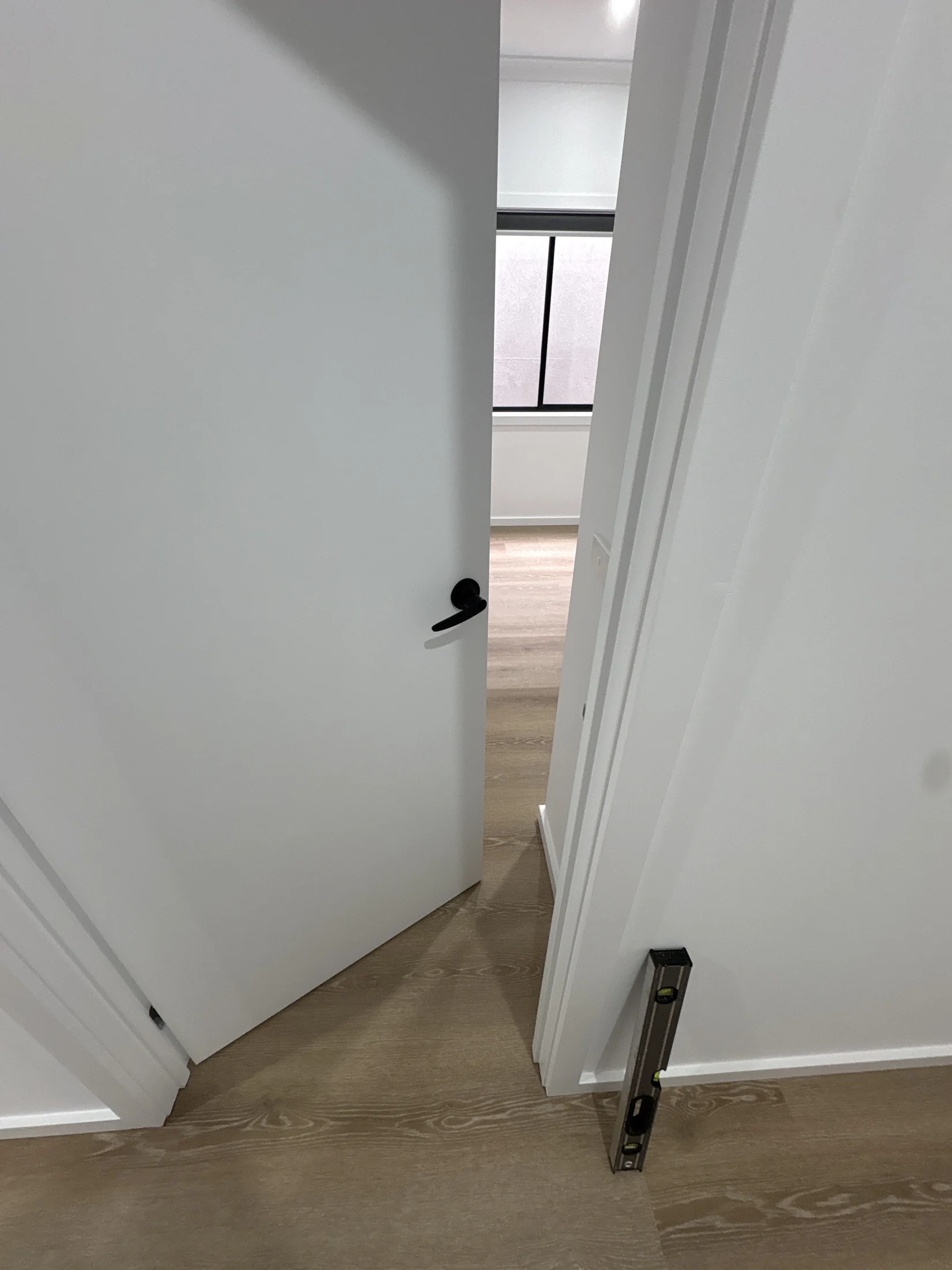
Why This Matters
Rattling doors are rarely caused by a single issue at handover. They are typically the result of:
Minor misalignment carried through stages
Hardware not fully adjusted at fixing
Final tolerances not refined before completion
This reinforces why inspections at multiple stages are valuable, as outlined in Why Independent Inspections Are Carried Out at Multiple Stages of a New Build.
How Rattling Doors Relate to Other Handover Defects
Rattling doors are rarely an isolated issue.
They often appear alongside:
Slight door misalignment
Skirting or architrave gaps
Cabinet door adjustments
Paint touch-ups
Window alignment issues
These are all typical of final-stage findings and are covered more broadly in Common Defects Found at Practical Completion Stage in Melbourne.
This context helps position rattling doors as part of a larger quality and finishing review, rather than a standalone concern.
Why Independent Inspections Help Identify Issues Like This
At handover, it is easy to focus on presentation. However, many defects at this stage relate to how elements perform, not just how they look.
Independent inspections focus on:
Operation of installed components
Interaction between building elements
Real-world functionality
This approach is central to the process explained in Construction Stage Inspections in Melbourne — What They Are And Why They Matter, where each stage builds toward final performance.
How This Appears Across Melbourne Growth Areas
Rattling door issues are commonly identified in high-volume construction areas such as:
Across these locations, consistent construction methods and timelines can lead to similar finishing-stage adjustments being required.
FAQ Section
Why do doors rattle in new homes
Doors usually rattle due to latch misalignment, loose hardware, or minor frame movement during final construction stages.
Is a rattling door a defect
Yes, in most cases it is considered a functional defect because the door is not securely closing as intended.
Can rattling doors be fixed easily
Yes, they are typically resolved with minor adjustments to the latch, strike plate, or hardware.
Should rattling doors be fixed before handover
Yes, they should be addressed before handover to ensure proper function from the start.
Why does this issue only appear at handover
Because doors and hardware are installed late and the home becomes sealed, making movement more noticeable.
Final Thoughts on Why Doors Rattle at Handover in New Homes and What It Means
Rattling doors at handover are a common and generally minor defect, but they still indicate that final adjustments are required.
They highlight:
The importance of finishing-stage accuracy
The difference between visual completion and functional performance
The value of structured inspections before handover
Addressing these issues before completion helps ensure the home operates as intended from day one.