Browse article topics
Bathroom Vanity and Cabinet Defects in New Homes: What’s Normal and What’s Not
Walking into your bathroom at PCI, everything should feel clean, sharp, and complete. The vanity is usually a focal point, so even small inconsistencies stand out quickly.
Across Melbourne growth areas like Tarneit, Berwick, and Clyde North, many homeowners notice things like slight misalignment, gaps, or even early signs of moisture impact around vanities.
Understanding Bathroom Vanity and Cabinet Defects in New Homes: What’s Normal and What’s Not is important because wet areas operate very differently to kitchens or wardrobes. Moisture exposure is expected, not accidental, which means the tolerance for defects is lower.
This is where broader context matters. Articles like Practical Completion Inspection (PCI) Defects in New Homes — What Inspectors Commonly Find Before Handover, Waterproofing in New Homes — A Complete Guide for Homeowners, and Water Damaged Melamine Panels in New Homes: Why Replacement Is Usually the Only Proper Fix help explain why even small issues in bathrooms can become bigger problems over time.
Bathroom Vanity and Cabinet Defects in New Homes: What’s Normal and What’s Not
Bathroom cabinetry sits within a controlled wet environment. That means:
Water exposure is expected daily
Steam and humidity are constant
Sealing and waterproofing must perform properly
Small defects can escalate faster
Some variation is normal, but the threshold is tighter. What might be acceptable in a kitchen may not be acceptable in a bathroom.
Common Bathroom Vanity and Cabinet Defects
Swollen or Water Damaged Panels
Swelling at kickboards, side panels, or under basins is one of the most important defects to identify. This usually indicates moisture has entered the board.
Missing or Poor Silicone Sealing
Gaps behind basins or between splashbacks and cabinetry can allow water to enter areas that should remain dry.
This is a known issue covered in Missing Silicone Behind Baths and Basins: A Hidden Waterproofing Risk in New Homes.
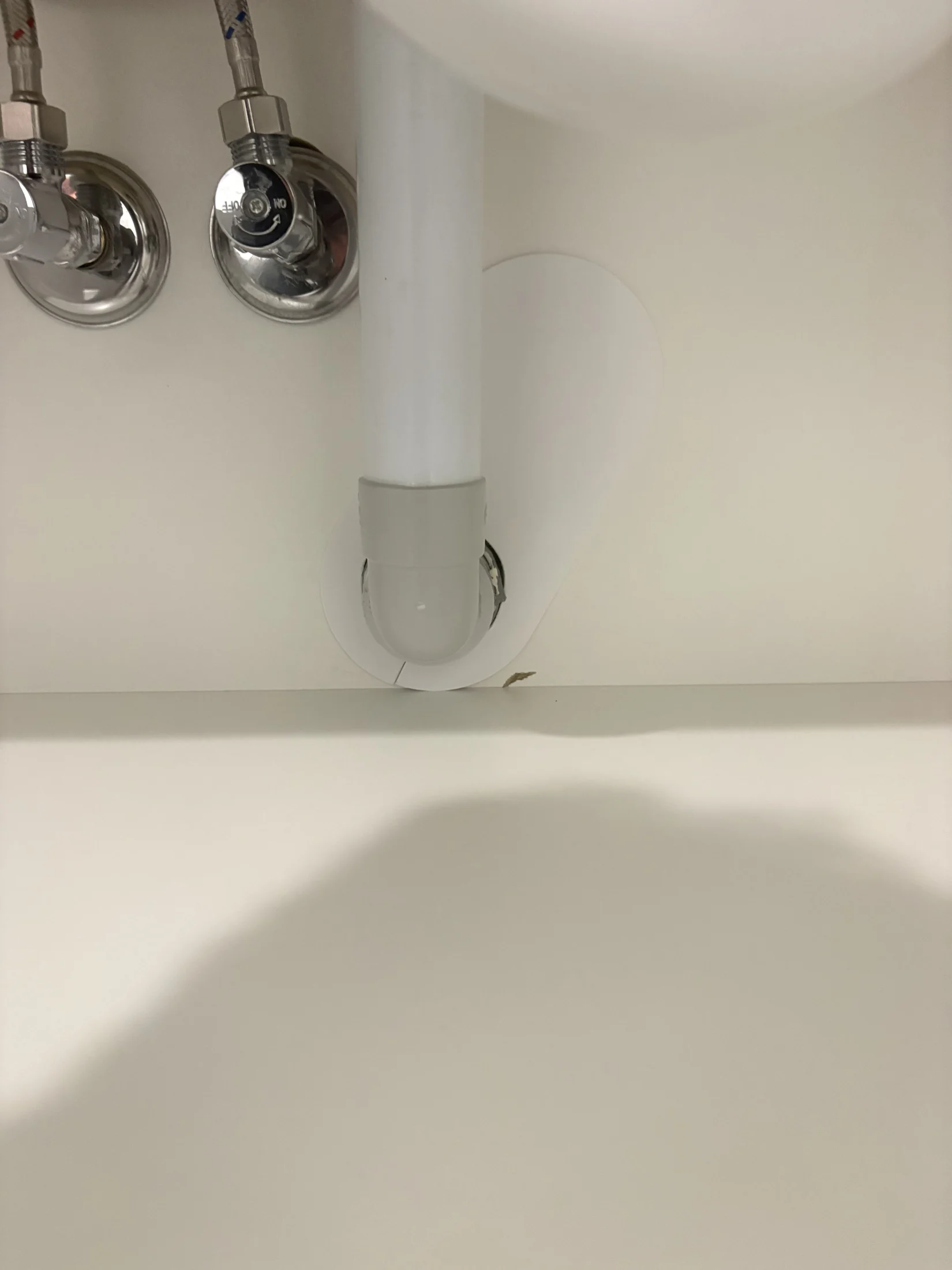
Unsealed Cut-Outs
Areas where plumbing penetrates cabinetry should be sealed. If left exposed, moisture can enter and damage the board internally.
Warping or Movement
Humidity and moisture exposure can cause panels to move or distort if materials or installation are not adequate.
Moisture management is critical across all wet areas. Laundry Cabinet Defects in New Homes: What’s Normal and What’s Not explores how even minor exposure can lead to cabinet failure.
Damaged or Marked Surfaces
Scratches or chips may occur during construction and should be assessed before handover.
Alignment of Splashbacks, Mixers, and Cabinetry
This is an area that often gets overlooked but has a strong visual and practical impact.
In a well-finished bathroom vanity:
Mixers are typically centred to basins
Basins are aligned with cabinetry below
Cabinet doors are positioned symmetrically under fixtures
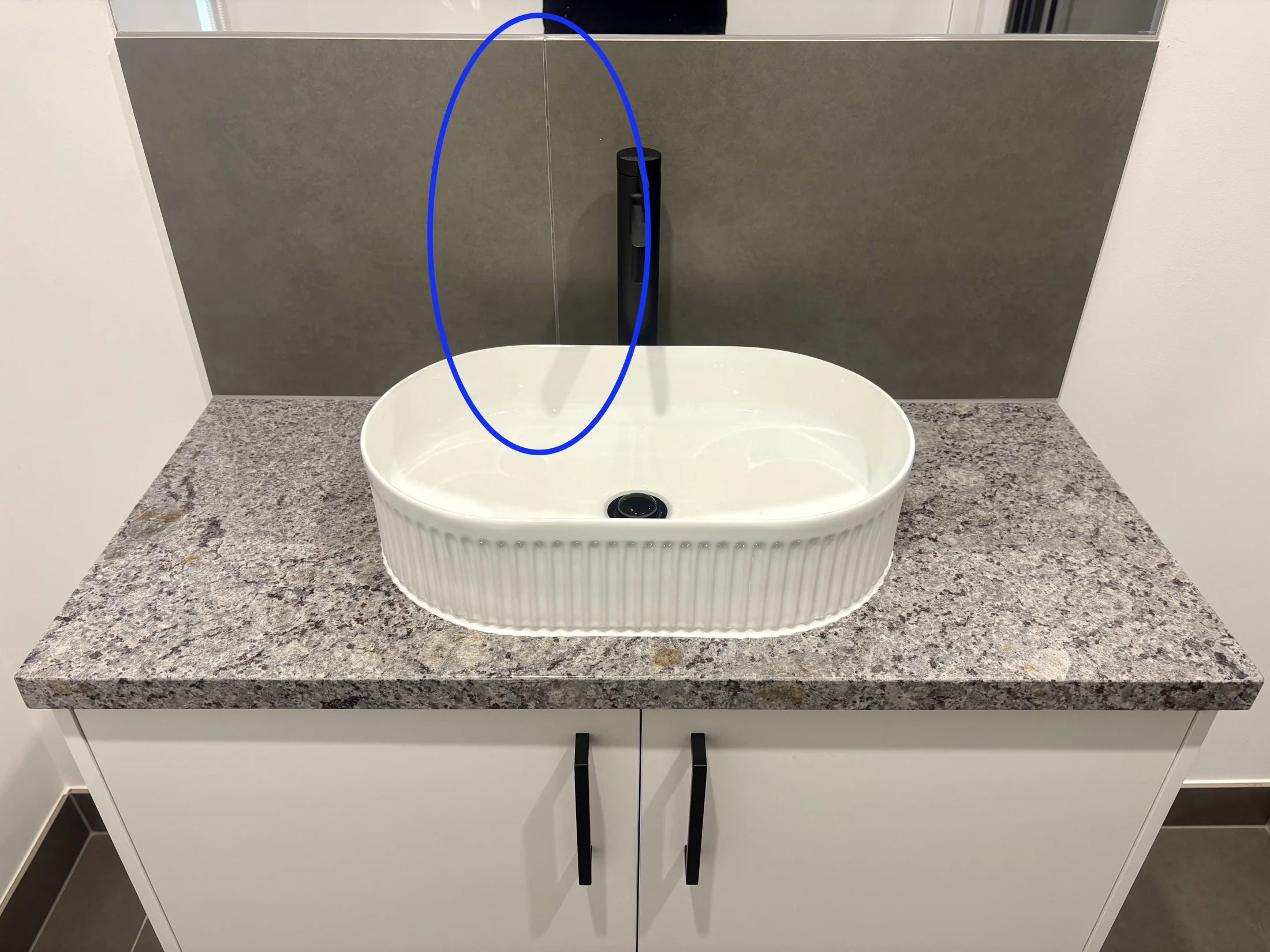
Splashback tiles or wall finishes align consistently with tapware and features
Where these elements do not line up, it can create a disjointed appearance even if each individual component is installed correctly.
Examples of alignment concerns include:
Mixer not centred to basin
Basin not centred to vanity unit
Cabinet doors offset from basin or mixer
Splashback grout lines not aligning with fixtures
While minor variation can occur, noticeable misalignment may be considered a defect, particularly where it affects the visual consistency of the space.
Why Bathroom Cabinets Are More Vulnerable Than Kitchens
Bathrooms introduce constant exposure to:
Direct water splash
Steam and condensation
Cleaning products
Ongoing moisture cycles
In areas like Berwick and Clyde North, where homes are tightly built and well sealed, humidity can also linger longer indoors.
This means cabinetry is under continuous stress, and even small defects in sealing or installation can lead to deterioration over time.
Water Damage in Bathroom Vanities
Bathroom Vanity and Cabinet Defects in New Homes: What’s Normal and What’s Not
Water damage is where bathroom cabinet defects become more serious.
As explained in Water Damaged Melamine Panels in New Homes: Why Replacement Is Usually the Only Proper Fix, once moisture enters the board:
The panel swells
The internal structure breaks down
The damage is permanent
Drying or resealing does not restore the material. This is why swollen panels at a vanity should not be treated as minor cosmetic issues.
Bathroom Cabinet Defects at PCI
At PCI, homeowners should pay close attention to:
Swelling or softness in panels
Sealing around basins and splashbacks
Alignment of cabinetry and fixtures
Stability and fixing of units
Finish quality
For a more detailed breakdown, Swollen Cabinet Panels at PCI: What Homeowners Should and Shouldn’t Accept explains how to assess these issues during handover.
Cosmetic vs Structural Issues in Bathrooms
Bathroom Vanity and Cabinet Defects in New Homes: What’s Normal and What’s Not
In bathrooms, the line between cosmetic and structural is narrower.
Cosmetic:
Minor marks
Slight alignment variation
Structural or performance-related:
Swelling
Moisture damage
Poor sealing
Movement or instability
Because of the environment, even small issues can lead to long-term damage if not addressed properly.
How Waterproofing and Sealing Affect Cabinetry
Bathroom cabinetry relies heavily on surrounding systems:
Waterproofing behind walls
Silicone sealing at junctions
Proper detailing at basins and fixtures
Waterproofing in New Homes — A Complete Guide for Homeowners explains how these systems work together.
If one part fails, cabinetry is often one of the first visible areas to show signs.
What Inspectors Look For
Inspectors typically assess:
Moisture exposure indicators
Panel condition and integrity
Sealing completeness
Alignment and installation quality
Overall finish consistency
The goal is to identify whether the vanity will perform as intended over time, not just look acceptable on the day.
Practical Advice for Homeowners
If you notice issues at your bathroom vanity:
Check for any swelling or softness
Look closely at sealing around basins
Assess alignment of mixers, basins, and cabinetry
Ask what has caused the issue
Confirm whether replacement is required
Understanding Bathroom Vanity and Cabinet Defects in New Homes: What’s Normal and What’s Not helps ensure you are not accepting defects that may worsen over time.
Final Thoughts
Bathroom cabinetry operates in one of the most demanding environments in the home.
Small issues are rarely isolated. They are often early indicators of moisture exposure, sealing gaps, or installation problems.
Bathroom Vanity and Cabinet Defects in New Homes: What’s Normal and What’s Not comes down to recognising when something is simply visual, and when it affects long-term performance.
With the right approach at PCI, homeowners can avoid accepting defects that may lead to more significant issues later.
FAQs
Are bathroom vanity defects common in new homes?
Yes, minor defects can occur, but wet areas have stricter expectations due to moisture exposure.
What vanity defects are considered normal?
Minor alignment variation and small surface marks may be considered normal.
What vanity defects are not acceptable at PCI?
Swelling, water damage, poor sealing, and instability are not acceptable.
Should swollen vanity panels be replaced?
Yes, swelling usually indicates permanent internal damage.
Why do bathroom cabinets swell?
Moisture entering the board through leaks, poor sealing, or exposure to water.
Is misalignment of mixers and basins a defect?
If noticeable and affecting visual balance, it may be considered a defect.
Should cabinet doors align with the basin?
Generally yes, for both visual consistency and design intent.
Do splashbacks need to align with fixtures?
While minor variation can occur, noticeable misalignment may be considered poor finish.
Can silicone gaps cause cabinet damage?
Yes, they allow moisture to enter areas that should remain dry.
Is bathroom humidity enough to damage cabinets?
Over time, yes, especially if materials or sealing are inadequate.
Can water damage be repaired without replacement?
Usually not, as the board structure is compromised.
Should I accept minor defects at PCI?
Only if they are clearly cosmetic and within reasonable tolerance.
What should I check around a bathroom vanity?
Sealing, swelling, alignment, and overall finish quality.
Are vanity cabinets covered under defect liability?
Generally yes, depending on cause and timing.
Why do defects appear at handover?
Because cabinetry is installed late in the build.
Do inspectors check bathroom cabinetry?
Yes, as part of PCI inspections.
Can defects worsen over time?
Yes, especially in wet environments.
What causes poor cabinet alignment?
Installation issues or design layout inconsistencies.
How can I prevent vanity defects?
Ensure proper inspections and sealing are completed correctly.
Is an independent inspection worth it?
Yes, particularly for wet areas where defects can escalate quickly.