Browse article topics
Water Damaged Melamine Panels in New Homes: Why Replacement Is Usually the Only Proper Fix
Updated:
In many new homes across Melbourne growth areas like Sunbury, Tarneit, Plumpton, and Berwick, cabinetry finishes can look perfect at first glance. But once moisture gets into melamine panels, the issue quickly shifts from cosmetic to structural.
Understanding Water Damaged Melamine Panels in New Homes: Why Replacement Is Usually the Only Proper Fix is important because this is one of those defects that often gets underestimated. It might start as a small swollen edge or slight bubbling, but once the panel has absorbed moisture, the material itself is compromised.
This is also where broader inspection context matters. Articles like New Build Stage Inspections in Melbourne — A Complete Guide to Every Inspection Stage, When Is the Right Time to Book Each Stage Inspection for a New Build?, and How a New Home Is Built in Australia — From Slab to Handover help explain how and when these issues form, even if they only become visible much later.
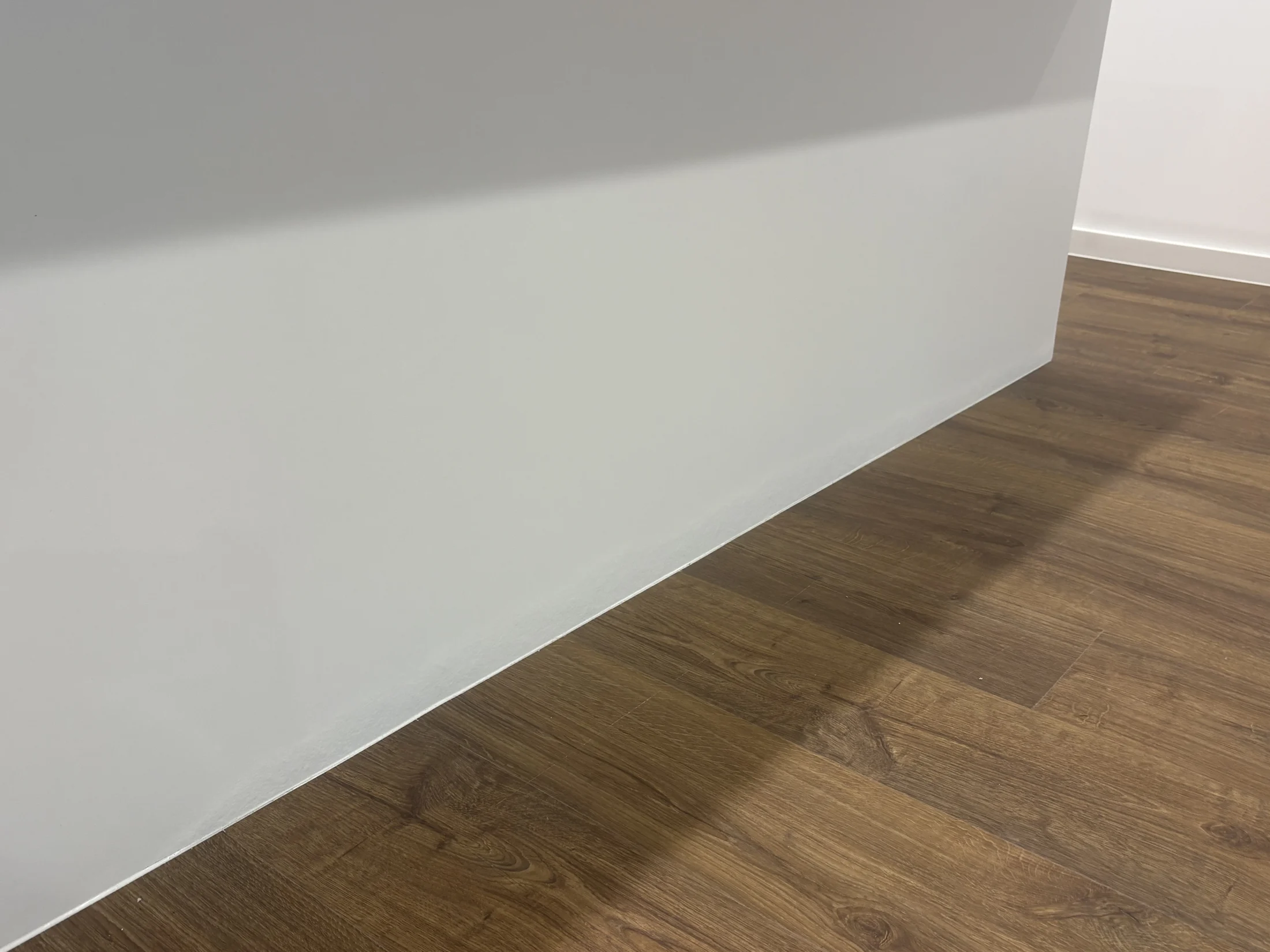
What Are Melamine Panels and Where Are They Used?
Melamine panels are commonly used throughout new homes for:
Kitchen cabinets
Bathroom vanities
Laundry cupboards
Wardrobes and shelving
They are typically made from particleboard or MDF with a melamine laminate surface.
While the outer layer is moisture resistant to a degree, the core material underneath is highly susceptible to water. Once moisture bypasses the surface, the board begins to swell, soften, and lose integrity.
Bathroom cabinetry is particularly vulnerable to moisture, and once panels begin to swell, the issue is rarely superficial. Bathroom Vanity and Cabinet Defects in New Homes: What’s Normal and What’s Not explains why these defects often require replacement rather than repair.
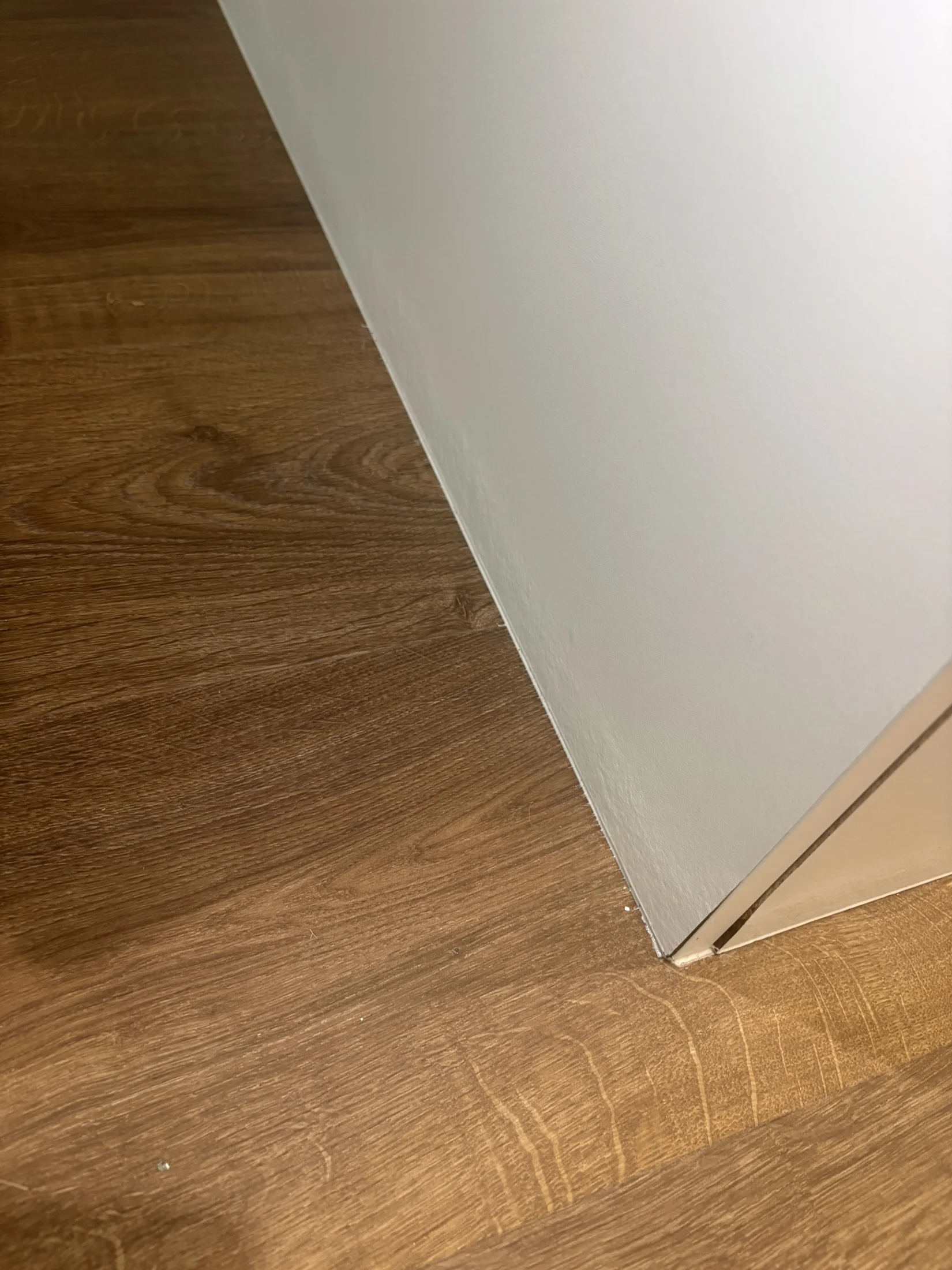
What Water Damage to Melamine Panels Usually Looks Like
Water damage is not always dramatic at first. It often presents as:
Swelling along edges or joins
Bubbling or lifting of the laminate surface
Discolouration or staining
Soft or spongy feel to the board
Blown corners or expanded joints
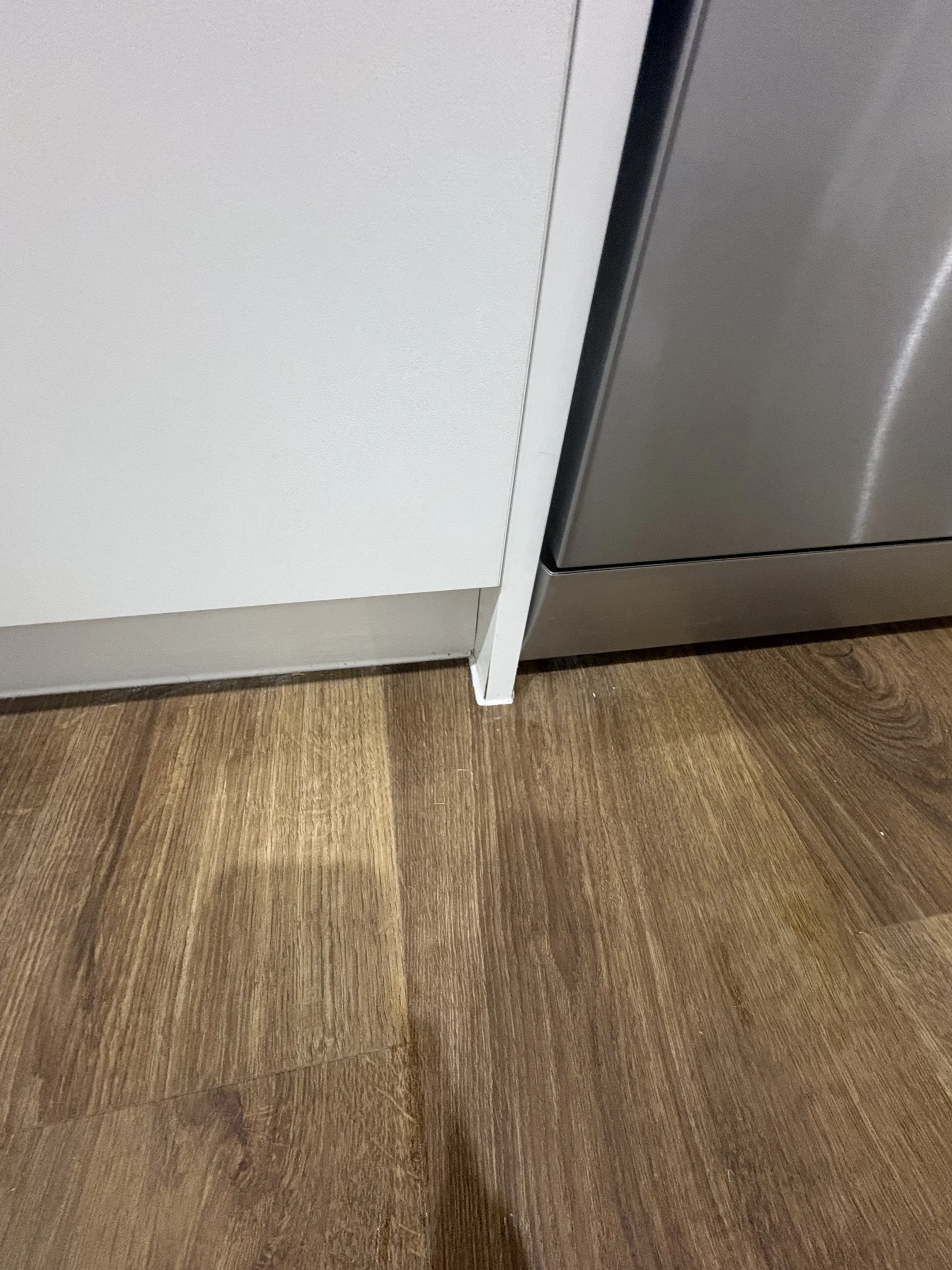
In homes across areas like Plumpton and Officer, these signs often appear in wet areas or near plumbing fixtures, but they can also show up in kitchens or laundries where splash exposure or minor leaks occur over time.
When cabinet panels begin to swell or deteriorate, the issue often goes beyond appearance. For a deeper explanation of why replacement is usually required, see Kitchen Cabinet Defects in New Homes: What’s Normal and What’s Not, which outlines how to assess these defects properly.
Why Water Damaged Melamine Panels in New Homes Usually Need to Be Replaced
Once moisture penetrates melamine, the internal structure of the board changes. The core material expands and breaks down, which means:
The panel no longer holds its original shape
The laminate surface may detach or continue to lift
The board loses strength and durability
Moisture resistance is permanently reduced
Even if the surface is dried or resealed, the internal damage remains.
This is why Water Damaged Melamine Panels in New Homes: Why Replacement Is Usually the Only Proper Fix is not just a visual consideration. It is about whether the material can continue to perform properly over time.
Why Drying or Patching Is Not a Reliable Solution
It is common for homeowners to be told that the panel can simply be dried, resealed, or touched up.
In reality:
Drying does not reverse swelling
Repainting does not restore structural integrity
Sealing over damaged areas does not stop internal deterioration
Cosmetic fixes often fail over time
Once the board has absorbed water, the change is permanent.
This is similar in principle to issues discussed in Unsealed Melamine Shelf Cut Outs: A Small Detail That Can Lead to Bigger Issues in New Homes, where exposed internal material allows moisture to enter and cause long-term damage.
Once melamine is exposed to water, it cannot be restored. Laundry Cabinet Defects in New Homes: What’s Normal and What’s Not explains why replacement is often required rather than repair.
What Causes Water Damage in the First Place?
The damaged panel is usually a symptom, not the root cause.
Common sources include:
Minor plumbing leaks
Poor sealing around sinks or basins
Missing or failed silicone
Splash exposure over time
Inadequate waterproofing details
Articles like Missing Silicone Behind Baths and Basins: A Hidden Waterproofing Risk in New Homes and Waterproofing in New Homes — A Complete Guide for Homeowners help explain how moisture can travel into areas homeowners do not expect.
When This Issue Is Usually Identified
Water damaged melamine panels are most commonly identified during:
Early post-handover use
At fix stage, issues may still be developing or only partially visible. By PCI, swelling or damage is often clearer.
This aligns with findings typically seen in Practical Completion Inspection (PCI) Defects in New Homes — What Inspectors Commonly Find Before Handover.
Why Stage Inspections Still Matter
Even though the visible damage may appear late, the cause often originates earlier.
This is why Why Independent Inspections Are Carried Out at Multiple Stages of a New Build, And How It Adds Value is important. Early inspections help identify:
Waterproofing issues before tiling
Plumbing concerns before enclosure
Sealing and detailing risks before finishes
By the time cabinetry is installed, the opportunity to address underlying causes may be more limited.
How Inspectors Assess These Defects
A good inspection will distinguish between:
Minor surface marks that are cosmetic
Genuine water damage that affects the board
Inspectors will typically consider:
Location of the damage
Extent of swelling or deformation
Whether the panel has lost integrity
Likely moisture source
Whether the issue is ongoing or historical
This ensures homeowners are not left with temporary fixes where replacement is more appropriate.
What Homeowners Should Do
If you notice swelling or damage:
Document the issue early
Check nearby plumbing and seals
Avoid accepting cosmetic patch repairs without explanation
Ensure the moisture source is identified
Confirm whether replacement is required
In many cases, replacement is not just recommended, it is necessary to restore proper performance.
Final Thoughts
Water Damaged Melamine Panels in New Homes: Why Replacement Is Usually the Only Proper Fix comes down to understanding how materials behave.
Once melamine panels absorb moisture, the damage is not just on the surface. The internal structure changes, and that cannot be reversed with simple fixes.
Replacement addresses the visible issue, but identifying the moisture source ensures it does not happen again.
FAQs
What causes melamine panels to swell in new homes?
Melamine panels swell when moisture enters the core material, usually through unsealed edges, leaks, or failed silicone.
Can water damaged melamine be repaired instead of replaced?
In most cases, no. Once the board swells, the structural integrity is compromised and replacement is usually required.
Is swollen melamine a defect in a new build?
It can be, particularly if caused by poor sealing, leaks, or installation issues.
Why does melamine bubble or lift?
This happens when moisture breaks down the bond between the laminate surface and the board underneath.
Can I just dry out the cabinet and leave it?
Drying may remove surface moisture but does not reverse internal damage.
How do I know if the damage is serious?
Softness, swelling, and deformation are strong indicators that the panel is compromised.
Where is melamine most vulnerable to water damage?
Edges, cut-outs, sink areas, and joints are the most vulnerable points.
Does this happen before or after handover?
It can occur at either stage, but is often noticed closer to PCI or after moving in.
Should builders replace damaged panels at PCI?
If the panel is compromised, replacement is typically the correct outcome.
What is the difference between cosmetic and structural damage?
Cosmetic damage affects appearance only, while structural damage affects performance and durability.
Can waterproofing issues cause cabinet damage?
Yes, moisture from failed waterproofing can travel into cabinetry.
Are kitchen cabinets at risk too?
Yes, especially around sinks and dishwashers.
Does silicone failure contribute to this issue?
Yes, missing or deteriorated silicone can allow moisture entry.
How quickly can melamine deteriorate once wet?
Damage can begin quickly and worsen over time depending on exposure.
Is this common in new homes?
It is not uncommon, particularly in high-moisture areas.
Can I claim this as a defect after handover?
This depends on the cause and timing, but it is often raised during defect periods.
Will the damage spread?
If moisture continues, yes, it can worsen.
What inspections help prevent this?
Waterproofing stage and fix stage inspections are key.
Should I accept a touch-up repair?
Only if the issue is truly cosmetic. Otherwise replacement should be considered.
How do I prevent this happening again?
Ensure proper sealing, waterproofing, and that any leaks are addressed early.